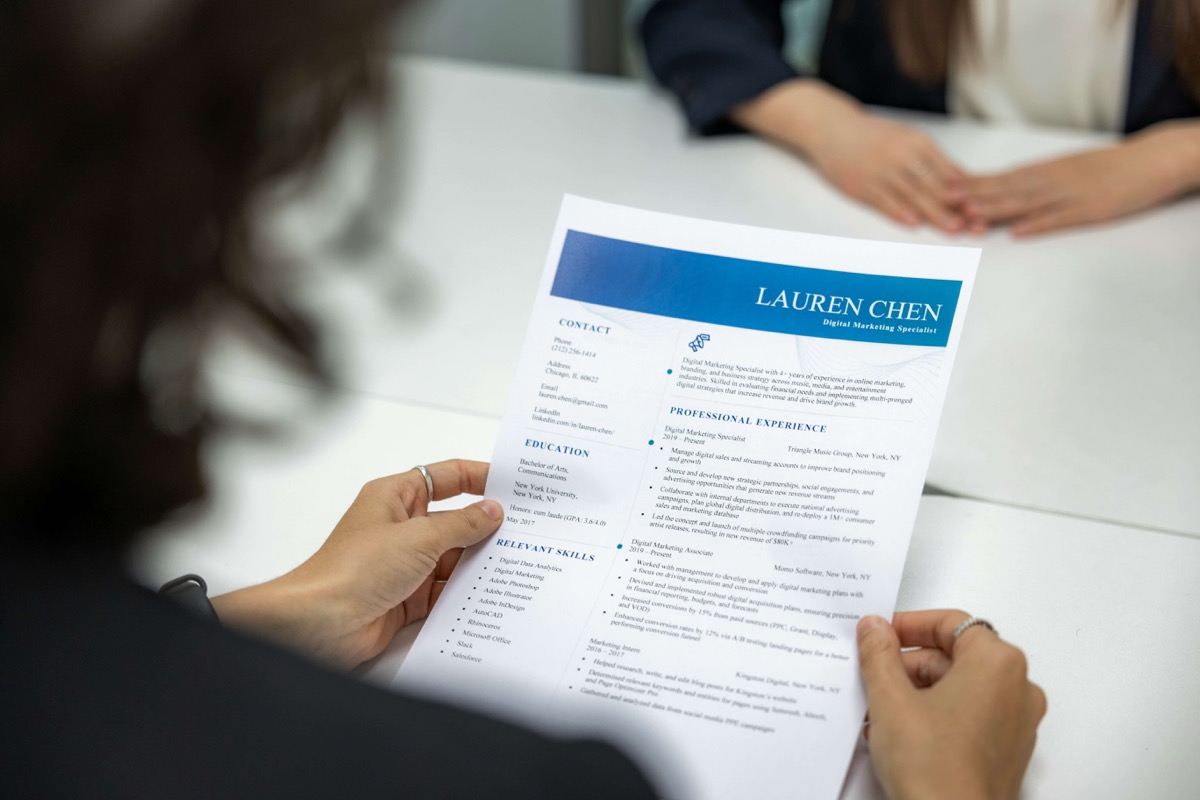
Ultimate Interview Preparation Guide: Complete Strategy from Resume to Offer
Systematic interview preparation methods covering resume optimization, company research, common questions, STAR method, salary negotiation, and the entire process to help you confidently tackle every interview.
Receiving an interview invitation is great news, but how do you convert that opportunity into an offer? This guide will help you prepare systematically and significantly boost your interview success rate.
Interview Preparation Timeline
Immediately After Receiving Invitation (Day 1)
✅ Must-Do Items:
- [ ] Confirm interview time and location
- [ ] Understand interview format (phone/video/in-person)
- [ ] Ask about interview process and interviewer information
- [ ] Reserve preparation time (at least 3 days)
3-5 Days Before Interview
✅ Deep Preparation:
- [ ] Company research (2 hours)
- [ ] Position analysis (1 hour)
- [ ] Prepare common question answers (3 hours)
- [ ] Mock interview practice (2 hours)
- [ ] Prepare question list (30 minutes)
1 Day Before Interview
✅ Final Checklist:
- [ ] Confirm interview location and route
- [ ] Prepare interview attire
- [ ] Print 3 copies of resume
- [ ] Prepare portfolio/case studies
- [ ] Check equipment (video interviews)
- [ ] Early sleep for good rest
Interview Day
✅ Execution Checklist:
- [ ] Arrive 15-30 minutes early
- [ ] Turn off phone notifications
- [ ] Bring notebook and pen
- [ ] Maintain smile and eye contact
- [ ] Record key information
Company Research Guide
Essential Information to Know
1. Company Basic Information
Information Sources:
- Official website
- LinkedIn company page
- Glassdoor reviews
- News coverage
Key Focus Areas:
Basic Information:
├─ Founding time and development history
├─ Company size (number of employees)
├─ Funding status (for startups)
├─ Main business and products
└─ Target customer base

Culture & Values:
├─ Company mission and vision
├─ Core values
├─ Work atmosphere reviews
└─ Employee benefits policy

Market Position:
├─ Industry ranking
├─ Competitors
├─ Market share
└─ Recent developments
2. In-Depth Position Analysis
Key Questions:
- Why is this position being recruited? (New/Replacement)
- What's the team structure?
- Who will I report to directly?
- What are the core responsibilities?
- What are the success criteria?
Job Description Breakdown:
Example Job Description:
"We are looking for a Senior Product Manager to lead our mobile app development. You will work with cross-functional teams..."
Breakdown Analysis:
- Position Level: Senior (5+ years)
- Core Responsibility: Lead (leadership role)
- Product Type: Mobile App
- Key Capability: Cross-functional collaboration
3. Industry Background Research
Understanding Industry Trends:
- Current hot topics
- Technology development direction
- Market challenges and opportunities
- Regulatory policy changes
Recommended Tools:
- Google Trends (trend analysis)
- Crunchbase (company funding)
- Glassdoor (employee reviews)
- LinkedIn (network relationships)
Research Output Template
Prepare a one-page research summary:
## [Company Name] Interview Research

### Company Overview
- Founded: 20XX
- Size: XXX employees
- Business: Main products/services
- Funding: X round, $XXM

### Position Analysis
- Position: Senior Product Manager
- Team: 10-person product team
- Reports to: VP of Product
- Key Responsibilities: Mobile product planning

### Core Focus Points
1. Recently launched new XXX feature
2. Expanding into XXX market
3. Emphasizes XX culture

### Possible Interview Questions
- Thoughts on our product?
- How to improve user growth?
- Cross-departmental collaboration experience?

### My Questions
- Product roadmap?
- Team collaboration style?
- Success metrics?
Common Interview Questions & Answer Strategies
Self-Introduction (Must Ask)
Time Control: 1-2 minutes
Structure Framework:
Opening (15 seconds)
├─ Name + Current position
└─ Professional field

Experience (45 seconds)
├─ 3-4 sentences summarizing career
├─ Highlight key achievements
└─ Show career growth

Present (20 seconds)
├─ Why interested in this opportunity
└─ What value can you bring

Closing (10 seconds)
└─ Express anticipation
Example Answer (Software Engineer):
"Hello, I'm Zhang Ming, currently a Senior Software Engineer at ABC Tech, specializing in backend development and architecture design.
Over the past 5 years, I've grown from a junior engineer to a technical team lead. At my current company, I led the migration to microservices architecture, optimizing system response time from 2 seconds to 200 milliseconds, supporting growth from 100K to 1M daily active users. I've also led a 5-person team delivering 3 core product modules.
I'm interested in your company because of your innovation in XX field, especially the XX product. I believe my experience in high-concurrency systems and team collaboration can create value for the team.
I look forward to having an in-depth conversation today to learn more about this position."
Why Choose Our Company?
❌ Poor Answers:
- "High salary"
- "Close to home"
- "Want to change jobs"
✅ Excellent Answer Structure:
1. Company Attraction (30%)
   - Product/Technology/Culture

2. Position Match (40%)
   - Aligns with personal development direction
   - Leverages own strengths

3. Value Creation (30%)
   - Specific contributions possible
Example Answer:
"I'm attracted to your company for three main reasons:
First, your company's technical innovation in XX field impressed me. Especially the recently launched XX feature, which solves XX pain points - this is exactly what I've been focusing on.
Second, this Product Manager position perfectly aligns with my career development. I've been deeply involved in mobile product development for the past 3 years, accumulating experience from 0-to-1 and 1-to-100, which can be applied to your XX product.
Finally, I believe my experience in user growth and data-driven approaches can bring value to the team. I once increased product conversion rate by 45% through A/B testing optimization, and I hope to replicate this methodology at your company."
What Are Your Strengths?
STAR Method Application:
S (Situation) - Background context T (Task) - Task objectives A (Action) - Action measures R (Result) - Results achieved
Example:
"My core strength is data analysis and problem-solving ability.
Specific Case: At my previous company [S], our mobile conversion rate continuously declined from 5% to 3%, affecting business growth [T]. My task was to find the cause and improve conversion rate.
[A] My approach was:
- First established data tracking system, analyzed user behavior funnel
- Through data discovered the problem was in the registration process, with severe user drop-off at step three
- Collaborated with design and development teams to simplify registration process from 5 steps to 3
- Conducted A/B testing for validation
[R] Result was conversion rate improved to 6.5%, exceeding original levels, bringing 30% new user growth to the company. This experience gave me deep understanding of the importance of data-driven decision making."
What Are Your Weaknesses?
Strategy: Real but not fatal + Improvement actions
❌ Avoid Saying:
- "I have no weaknesses"
- "I'm too perfectionist" (cliché)
- Core competency deficiencies
✅ Recommended Strategy:
- Choose non-fatal weakness
- Explain your awareness
- Show improvement actions
- Demonstrate growth mindset
Example:
"One of my growth areas is public speaking ability.
As a technical person, I previously focused more on coding and technical research. When doing technical sharing at large conferences, I would get somewhat nervous and my expression wasn't fluent enough.
After recognizing this, I took several actions:
- Joined the company's Tech Talk group, doing monthly technical sharing
- Joined Toastmasters speaking club
- Proactively took on new employee training instructor work in the department
After six months of practice, I can now confidently share at 50-person conferences. While not perfect yet, the progress is obvious. This experience also made me realize that any skill can be improved through deliberate practice."
Salary Expectations
Strategy: Let them make the first offer
Standard Answer:
"Regarding salary, I believe your company has a mature compensation system. I'm more focused on the development opportunities and team atmosphere of this position. Could you first share the salary budget for this role?"
If You Must Give a Number:
"Based on my experience level and market research, my expected salary range is XX-XX thousand. However, I'll also consider other factors comprehensively, such as career development space, learning opportunities, team culture, etc. If the position is truly suitable, I have some flexibility on salary."
Research Methods:
- Glassdoor salary data
- LinkedIn Salary
- Industry reports
- Friend recommendations
Behavioral Interview Questions (STAR Method)
Common Behavioral Questions List
Teamwork
- Describe a time you worked with a difficult colleague
- Tell me how you resolved team conflicts
- Share an example of helping team members grow
Problem Solving
- What was the biggest technical/business challenge you faced?
- How did you complete a task with limited resources?
- Tell me about a time you failed and what you learned
Leadership
- Describe your experience leading a project
- How do you motivate team members?
- How do you handle poor performance of team members?
Stress Management
- How do you deal with multiple urgent tasks?
- Describe an experience in a high-pressure work environment
- How do you balance work and life?
STAR Method Detailed Guide
Preparation Template:
### Case: [Short Title]

**S (Situation) - Background** (20%)
- Time, place, context
- What was the problem or challenge
- 2-3 sentences

**T (Task) - Task** (15%)
- Your role and responsibilities
- Expected goals
- 1-2 sentences

**A (Action) - Actions** (50%)
- What you specifically did (detailed)
- Why you did it
- What difficulties encountered and how overcome
- 4-6 sentences

**R (Result) - Results** (15%)
- Quantified outcomes
- What you learned
- Impact on team/company
- 2-3 sentences
Example Case Library (Prepare 5-7):
- Technical Challenge: Solving complex technical problems
- Project Management: Delivering project on time
- Team Conflict: Resolving team disagreements
- Customer Service: Handling customer complaints
- Innovation Optimization: Improving processes/products
- Failure Experience: Learning from failures
- Leadership Experience: Leading teams
Technical Interview Preparation (IT Roles)
Algorithms & Data Structures
Essential Knowledge:
Data Structures:
├─ Arrays and Strings
├─ Linked Lists
├─ Stacks and Queues
├─ Hash Tables
├─ Trees (Binary Trees, BST, Heaps)
└─ Graphs

Algorithms:
├─ Sorting and Searching
├─ Two Pointers
├─ Sliding Window
├─ Dynamic Programming
├─ Greedy Algorithms
├─ Backtracking
└─ BFS/DFS
Practice Strategy:
LeetCode Problem Allocation:
- Easy: 30 problems (foundation)
- Medium: 50 problems (focus)
- Hard: 10 problems (bonus)
Time Allocation:
- 1-2 hours daily
- Continue for 3-4 weeks
- Focus on Medium difficulty
System Design
Common Topics:
- Design a URL shortening service
- Design a news feed system
- Design a distributed cache
- Design a video streaming site
- Design a chat system
Preparation Framework:
1. Requirements Clarification (5 min)
   ├─ Functional requirements
   ├─ Non-functional requirements (QPS, DAU)
   └─ Assumptions and constraints

2. Capacity Estimation (5 min)
   ├─ Storage needs
   ├─ Bandwidth needs
   └─ Cache needs

3. System Interface (5 min)
   ├─ API design
   └─ Data models

4. High-Level Design (10 min)
   ├─ Overall architecture
   ├─ Core components
   └─ Data flow

5. Detailed Design (15 min)
   ├─ Database design
   ├─ Caching strategy
   ├─ Load balancing
   └─ Scalability

6. Bottleneck Analysis (5 min)
   ├─ Single points of failure
   ├─ Performance bottlenecks
   └─ Optimization approaches
Non-Technical Role Preparation
Case Analysis (Consulting/Product)
Preparation Framework:
1. Clarify Problem
   - Clarify ambiguities
   - Confirm objectives

2. Structure Analysis
   - Break down problem
   - Identify key factors

3. Data-Driven
   - Collect information
   - Quantitative analysis

4. Propose Solutions
   - Multiple options
   - Pros and cons comparison

5. Recommendation Summary
   - Best solution
   - Implementation plan
Product Design (Product Manager)
Common Questions:
- Design a product for blind people
- How to improve a WeChat feature?
- Design an APP for elderly users
Answer Framework:
1. Target Users (Who)
2. Usage Scenarios (When/Where)
3. Core Needs (What/Why)
4. Solutions (How)
5. Success Metrics
Salary Negotiation Techniques
Negotiation Timing
Best Time: After receiving offer
❌ Avoid:
- Discussing salary in first interview
- Negotiating before receiving offer
✅ Wait For:
- Complete all interviews
- Receive official offer
- Understand complete package
Negotiation Strategy
1. Understand Complete Compensation Package
Total Compensation =
├─ Base Salary
├─ Performance Bonus
├─ Stock Options
├─ Signing Bonus
├─ Insurance Benefits
├─ Commercial Insurance
├─ Paid Time Off
└─ Other Benefits (gym, commute, training, etc.)
2. Prepare Negotiation Scripts
Requesting Higher Salary:
"Thank you for the offer from your company, I'm very interested in this opportunity.
Based on my experience and market research, my expected salary is XX thousand. This number is based on:
- My 5 years of relevant experience
- Industry market level (provide data support)
- Value I can bring (specific examples)
Could you consider adjusting the salary to this range? If base salary has limitations, could it be compensated through stock or bonuses?"
Requesting More Time to Consider:
"Thank you for the offer, I need a few days to consider. I'm in the interview process with another company, expecting results by this Friday. Could you give me until next Monday to make a decision?"
3. Multi-Dimensional Negotiation
If salary won't budge, negotiate other items:
✅ Negotiable Items:
- Sign-on Bonus
- Year-end bonus
- Stock quantity
- Vacation days
- Remote work days
- Promotion timeline
- Training budget
- Equipment budget
Negotiation Taboos
❌ Don't Say:
- "I really need this job now"
- "I have no other options"
- "As long as you pay, it's fine"
- Lying or exaggerating other offers
❌ Don't Do:
- Be overly aggressive
- Threaten to leave
- Repeatedly change demands
- Negotiate for too long
Post-Interview Follow-up
Thank You Email (Within 24 Hours)
Template:
Subject: Thank You for Today's Interview - [Position Name]

Dear [Interviewer Name],

Thank you very much for taking the time to interview me today for the [Position Name] position.

I was delighted to learn about [Company Name]'s work in [specific field], especially what you mentioned about [specific content]. This has strengthened my desire to join your company.

Regarding [specific topic discussed] in the interview, I'd like to add [supplementary content].

I'm very interested in this opportunity and look forward to contributing my experience in [specific skills] to the team.

Thank you again for your time, looking forward to hearing from you.

Best regards,
[Your Name]
[Contact Information]
Waiting Timeline
Normal Timeline:
- After first round interview: 3-5 business days
- After final interview: 5-10 business days
- Offer release: 1-2 weeks
When to Follow Up:
- 3 days past promised time
- Have other offer deadline
- Clearly express continued interest
Follow-up Script:
"Hello [HR Name],
I'm [Your Name] who interviewed last Wednesday. Wanted to follow up on the recruitment progress for [Position Name].
I remain very interested in this opportunity. Please let me know if any supplementary materials are needed.
Looking forward to your reply, thank you!"
Interview Dos and Don'ts
Dress Code Recommendations
Principle: One level more formal than daily work attire
| Industry Type | Dress Recommendation | |--------------|---------------------| | Finance/Law/Consulting | Formal (Suit + Tie) | | Tech/Internet | Business Casual (Shirt + Dress Pants) | | Creative/Advertising | Smart Casual (Show personality) | | Startups | Neat Casual (T-shirt + Jeans OK) |
Virtual Interview Tips
✅ Environment Preparation:
- Clean background
- Adequate lighting (face window)
- Quiet environment
- Stable internet
✅ Equipment Check:
- Camera position (eye level)
- Microphone test
- Log in 15 minutes early
- Backup device ready
✅ Performance Tips:
- Look at camera (not screen)
- Keep smiling and nodding
- Pay attention to gestures (within frame)
- Avoid background distractions
In-Person Interview
What to Bring:
- [ ] 3-5 copies of resume
- [ ] Portfolio/work samples
- [ ] Notebook and pen
- [ ] List of references
- [ ] Questions for interviewer
Professional Etiquette:
- [ ] Arrive 10-15 minutes early
- [ ] Greet everyone politely
- [ ] Firm handshake and smile
- [ ] Turn off phone
- [ ] Thank interviewer at end
Body Language
✅ Positive Signals:
- Maintain eye contact (70% of time)
- Smile and nod
- Lean slightly forward (show interest)
- Open gestures
- Sit upright but relaxed
❌ Negative Signals:
- Avoid eye contact
- Crossed arms
- Fidgeting
- Looking at phone/watch
- Slouching posture
Summary
Interview Success Formula
Preparation × Confidence × Authenticity = Interview Success

Preparation:
├─ Company research
├─ Position analysis
├─ Answer preparation
└─ Mock practice

Confidence:
├─ Thorough preparation brings confidence
├─ Affirm your own value
└─ Maintain positive mindset

Authenticity:
├─ Present genuine self
├─ Don't exaggerate or lie
└─ Show growth mindset
Final Advice
- Every interview is a learning opportunity: Summarize even if you fail
- Maintain positive mindset: Don't be discouraged by one failure
- Continuous improvement: Optimize based on feedback
- Stay authentic: Show your real self
- Preparation is key: Opportunities favor the prepared
🎯 Prepare for Interviews with NiuMa CV:
- AI mock interviewer
- Common question answer generation
- STAR case library management
- Interview tips videos
Related Resources
Wishing you interview success and landing your dream offer! 💪
Share this article
Ready to Create Your Professional Resume?
Create an ATS-friendly professional resume in 5 minutes with NiuMa CV's AI tools
Get Started →